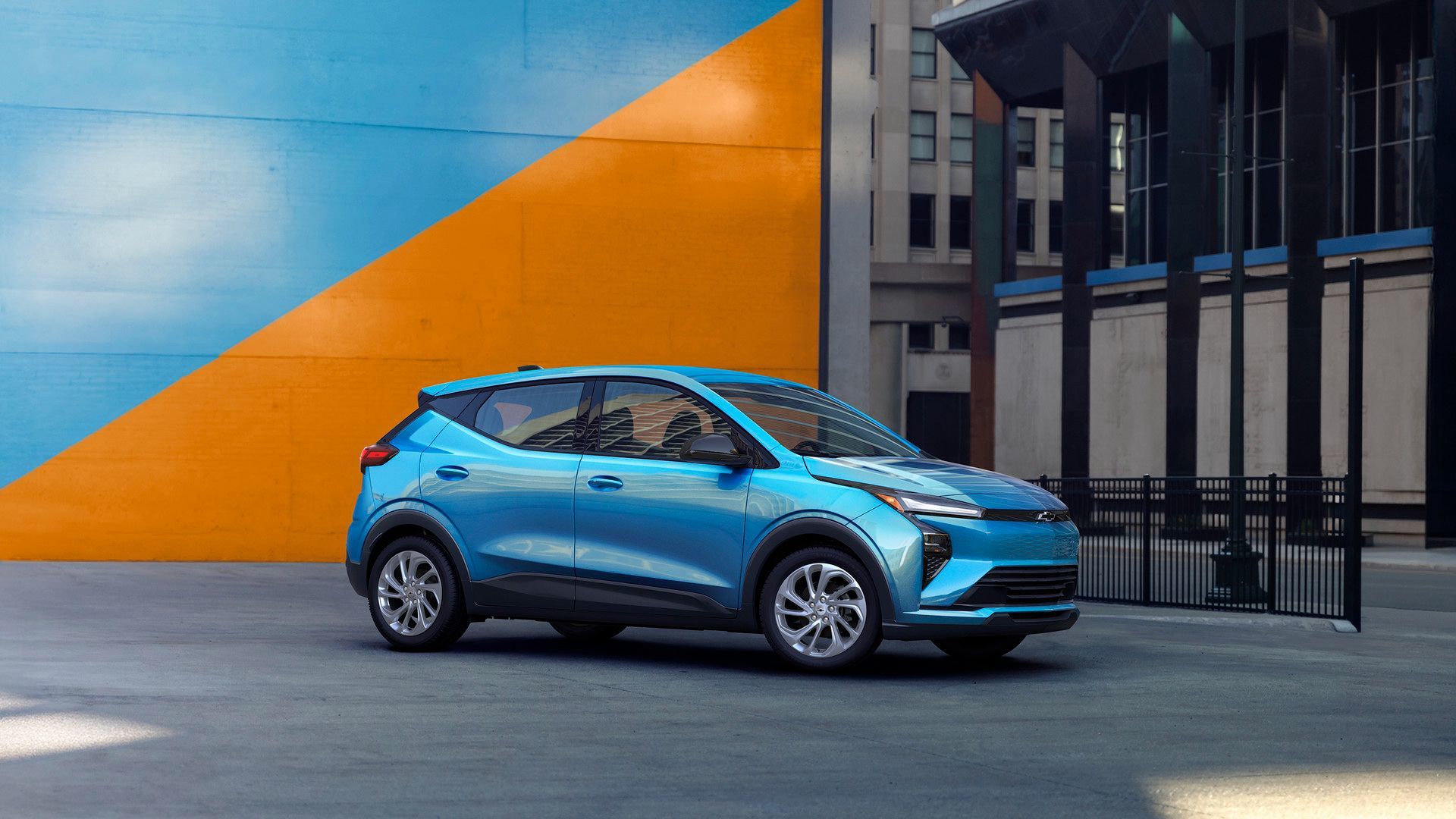
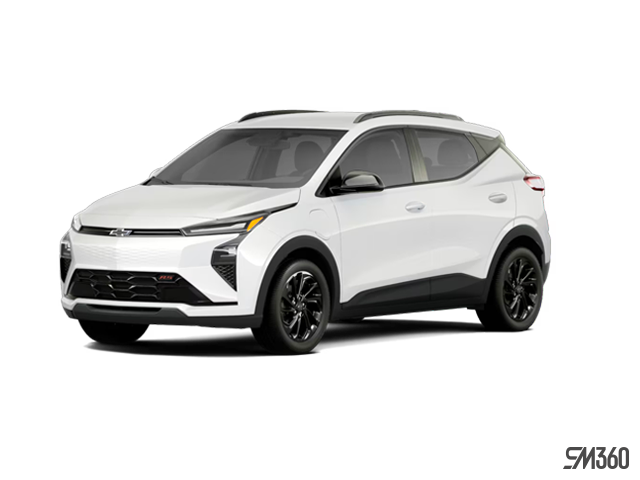
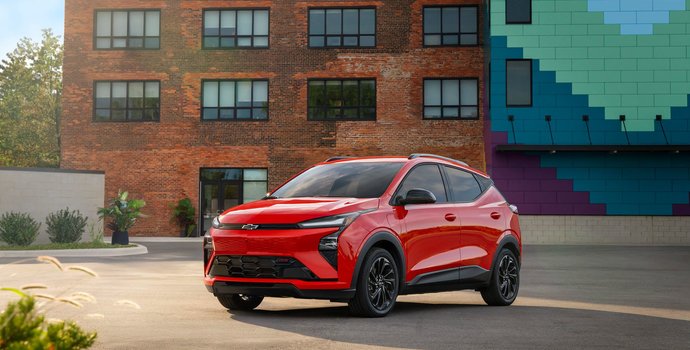
If you drive roughly 20,000 km per year and still pay at the pump, the math on switching to electric is worth running. The 2027 Chevrolet Bolt offers 422 km of estimated range, a native NACS charging port, and a setup built for overnight home charging.
The most useful comparison is against a compact ICE vehicle in the same segment. The 2026 Chevrolet Trax uses a 1.2L turbocharged 3-cylinder with EnerGuide estimates of 8.5 L/100 km city and 7.6 L/100 km highway. At current Ontario gas prices of around $1.59/L, fuel costs add up year after year.
Shop New GM EVs
Find your next GM electric vehicle with smart range, smooth performance, and charging options built for daily driving.
Explore GM EVs >
Understanding Ontario Electricity Rates for EV Charging
Ontario electricity pricing is set by the Ontario Energy Board (OEB) and works differently from a flat rate. Residential customers choose between three plans, each of which affects what it costs to charge an EV at home.
Time-of-Use (TOU) charges different rates depending on the time of day. Charging overnight on a weekday after 7 p.m. or on weekends falls under the off-peak rate of 9.8¢/kWh. That is the most common charging scenario for EV owners.
Ultra-Low Overnight (ULO) adds a fourth, lower tier. Charging between 11 p.m. and 7 a.m. every day costs only 3.9¢/kWh. This plan is designed for customers who can shift high-consumption loads to late night, making it a strong fit for overnight EV charging.
Tiered pricing charges a flat rate regardless of time: 12.0¢/kWh for the first threshold, then 14.2¢/kWh above it. Adding an EV to a Tiered plan will push most households into the higher tier for several months of the year.
What Driving 20,000 km a Year Actually Costs
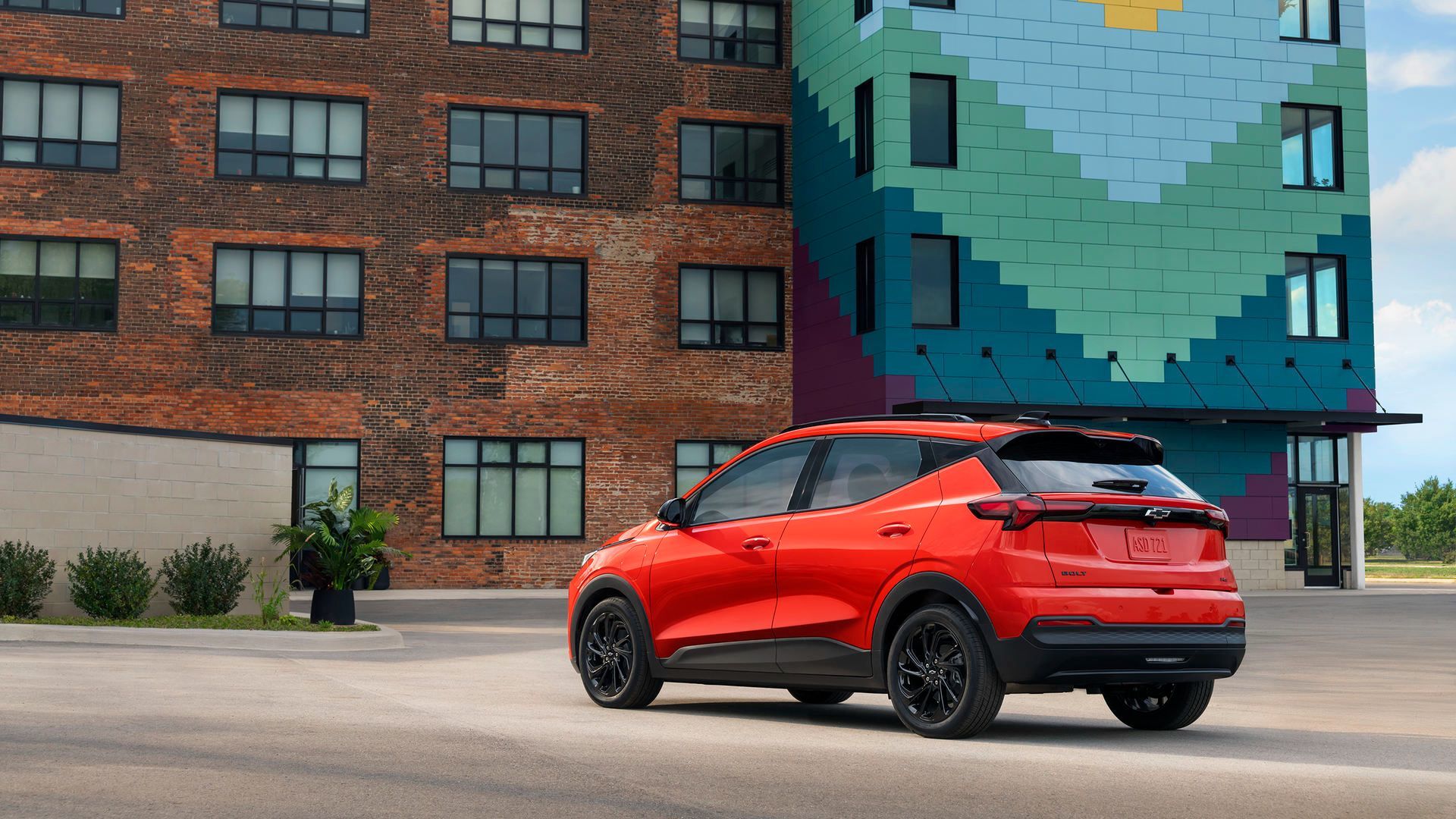
The 2027 Bolt has a 65 kWh battery and an estimated range of 422 km. That works out to roughly 15.4 kWh per 100 km of driving. At 20,000 km annually, the Bolt uses approximately 3,081 kWh of electricity per year.
Here is what that costs under each Ontario rate plan, covering electricity supply charges only:
- TOU off-peak overnight: approximately $302/year
- ULO ultra-low overnight: approximately $120/year
- Tiered (Tier 2 rate): approximately $437/year
The 2026 Trax returns a combined consumption of roughly 8.1 L/100 km on a typical city/highway mix. At $1.59/L over 20,000 km, that works out to approximately $2,576 in annual fuel costs.
The TOU off-peak scenario alone saves roughly $2,371 per year compared to the Trax.
Six-Year Ownership Savings
The table below shows cumulative costs over six years for the Trax (gas at $1.59/L) and the Bolt (TOU off-peak charging at 9.8¢/kWh), at 20,000 km annually.
|
Year
|
Trax Cumulative Fuel
|
Bolt Cumulative Charging
|
|
Year 1
|
$2,576
|
$302
|
|
Year 2
|
$5,152
|
$604
|
|
Year 3
|
$7,727
|
$906
|
|
Year 4
|
$10,303
|
$1,208
|
|
Year 5
|
$12,879
|
$1,509
|
|
Year 6
|
$15,455
|
$1,811
|
Over six years, the Trax accumulates approximately $15,455 in fuel costs. The Bolt on TOU off-peak accumulates approximately $1,811. That is an estimated $13,644 difference.
On the ULO plan, six-year charging costs drop to approximately $721, pushing the gap to roughly $14,734.
Assumptions: 20,000 km/year, Ontario gas at $1.59/L, Trax combined 8.1 L/100 km (55% city / 45% hwy), Bolt charging at OEB TOU off-peak rate (9.8¢/kWh, supply charges only). Fuel price held constant for illustration. Actual results will vary.
The Bolt's Charging Setup
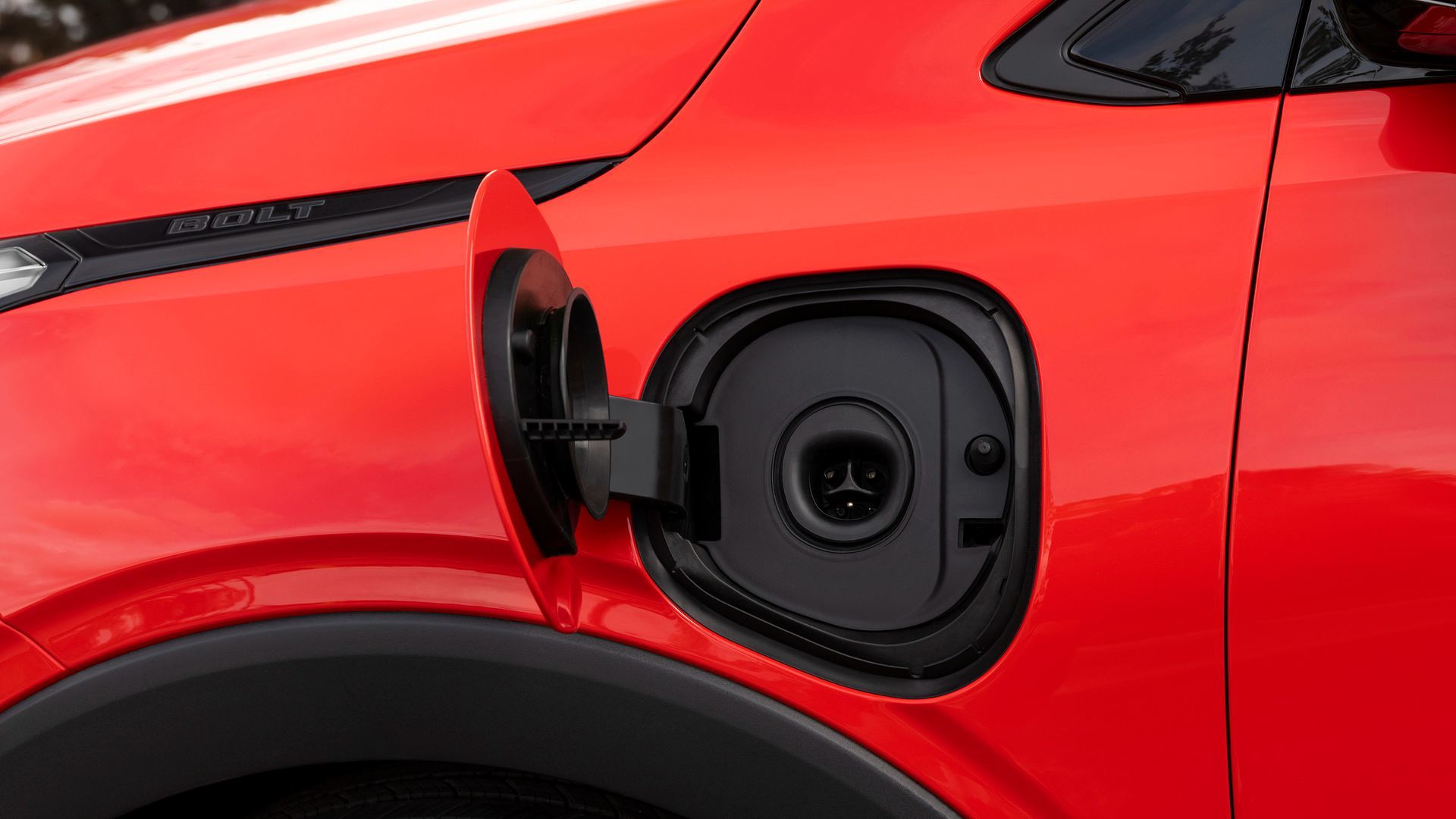
The 2027 Bolt is the first Chevrolet with a native NACS charging port, opening access to a broader public fast charging network. It supports DC fast charging up to 150 kW, more than 2.5 times faster than the previous generation.
From 10% to 80% battery charge takes approximately 26 minutes on a public DC fast charger. For daily use, the standard 11.5 kW onboard Level 2 module handles overnight home charging.
- 65 kWh battery, 422 km GM-estimated range
- 11.5 kW onboard Level 2 charging standard on both trims
- 150 kW DC fast charging; 10% to 80% in approximately 26 minutes
- Native NACS port standard
LT vs. RS: Two Ways to Drive the Bolt
Both the LT and RS share the same 65 kWh battery, 422 km range, and charging hardware. The differences are in appearance and interior finish.
The LT includes 17-inch silver-painted aluminum wheels, heated front seats, a heated steering wheel, Adaptive Cruise Control, and Blind Zone Steering Assist. An 11.3-inch infotainment screen with Google built-in is standard on both trims.
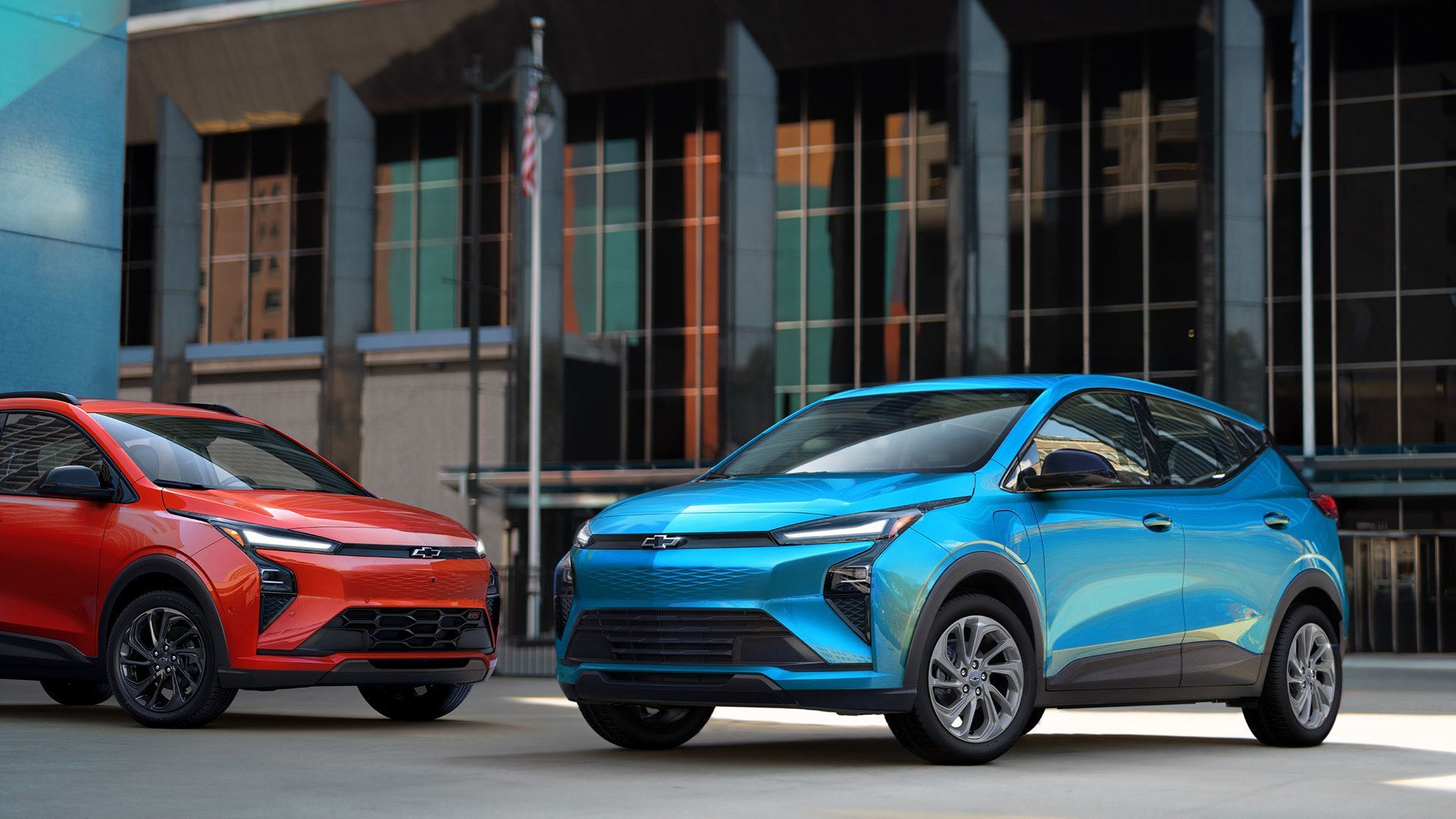
The RS adds gloss black 17-inch wheels, a gloss black grille, Evotex seating with red stitching, multi-colour ambient lighting as standard, and black roof rails.
Both include an 8-year/160,000 km battery warranty and an 8-year/160,000 km roadside assistance program.
The Savings You Don't See at the Pump
Fuel is the most visible cost difference, but there is more to the picture. EVs require no oil changes, fewer brake jobs due to regenerative braking, and no exhaust system upkeep.
Over a six-year ownership period, those maintenance savings build on top of the charging difference.
See the 2027 Bolt at Applewood Chevrolet Buick GMC
The 2027 Bolt makes a strong case on numbers alone, but the full picture is easier to work through in person.
Stop in at Applewood Chevrolet Buick GMC in Mississauga to compare both trims side by side, talk through Ontario rate plan options, and run the numbers against your own driving habits. The team is ready to walk you through everything.
You might also be interested in these blogs: Max Charging Capacity of Every Chevrolet Electric Vehicle Ranked, Anticipating the Smallest: 2027 Chevrolet Bolt vs. 2025 Equinox EV Size, Specs, and Range Comparison, 2026 Chevrolet Equinox vs. 2026 Equinox EV: Buyer’s Guide for Ontario Families