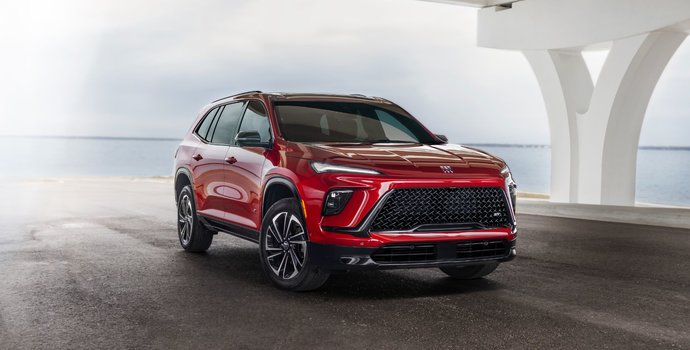
Choosing between the 2027 GMC Acadia and Terrain often comes down to one question: do you need a third row, or would a tighter, easier-to-park two-row crossover suit your week better? Ontario shoppers cross-shop these two GMC SUVs constantly, and the right answer depends less on overall size and more on how the vehicle actually gets used.
This comparison walks through seating, cargo, footprint, and daily driving character so the vehicle can match the household, not the other way around.
Acadia and Terrain at a Glance
|
Spec
|
Acadia
|
Terrain
|
|
Rows / seating
|
3 rows, 7-8 passengers
|
2 rows, 5 passengers
|
|
Cargo, seats in use
|
651 L (behind third row)
|
844 L (behind rear seats)
|
|
Cargo, seats folded
|
1,623 L (behind second row)
|
1,798 L (behind front seats)
|
|
Fuel economy city/hwy
|
12.1 / 10.1 L/100 km
|
9.9 / 8.5 L/100 km
|
|
Ground clearance (AT4)
|
197 mm
|
166 mm
|
|
Overall length
|
5,181 mm
|
4,597 mm
|
|
Wheelbase
|
3,072 mm
|
2,730 mm
|
|
Drivetrain
|
AWD (all trims)
|
AWD (all trims)
|
Seating and Third-Row Access
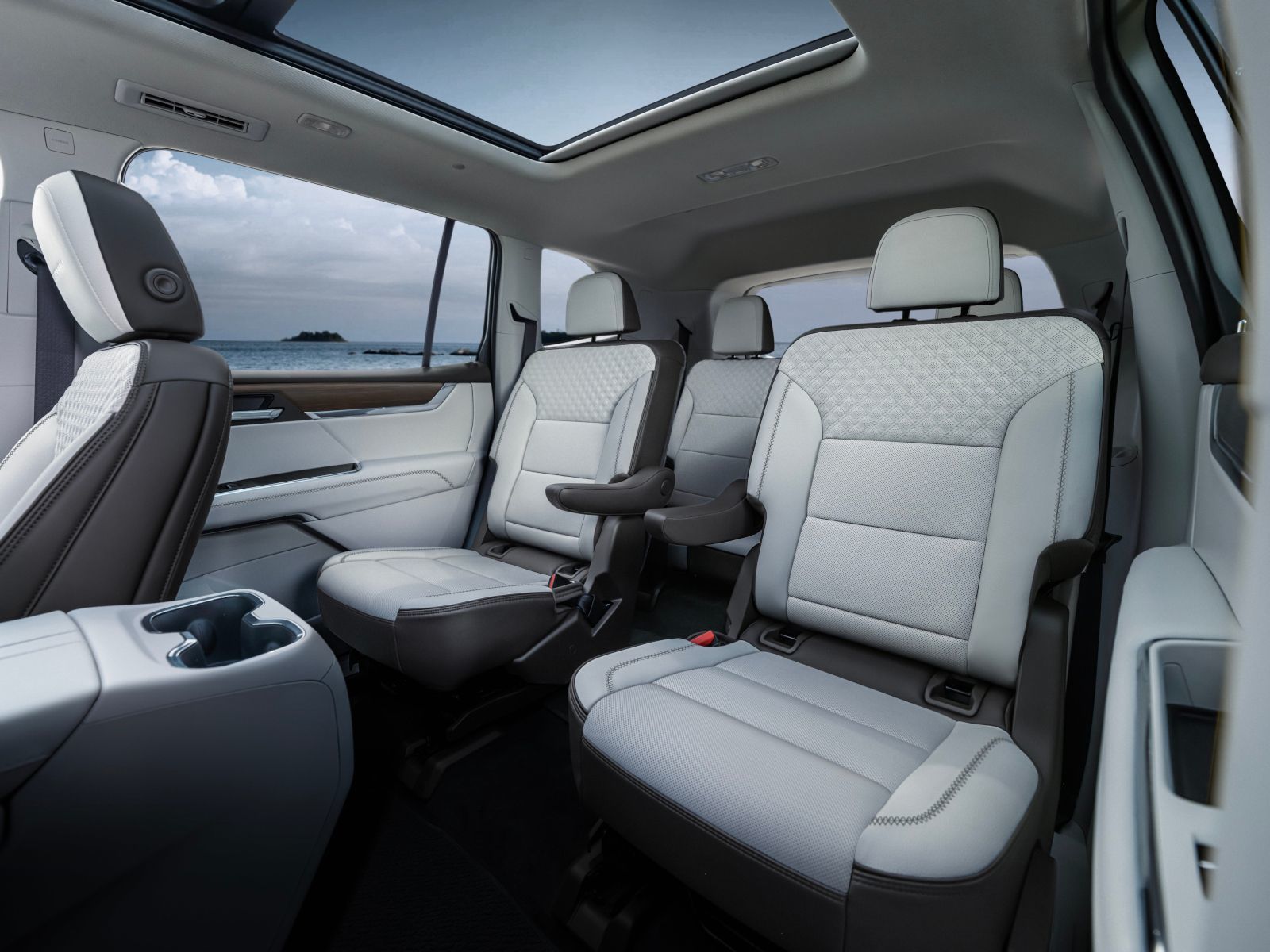
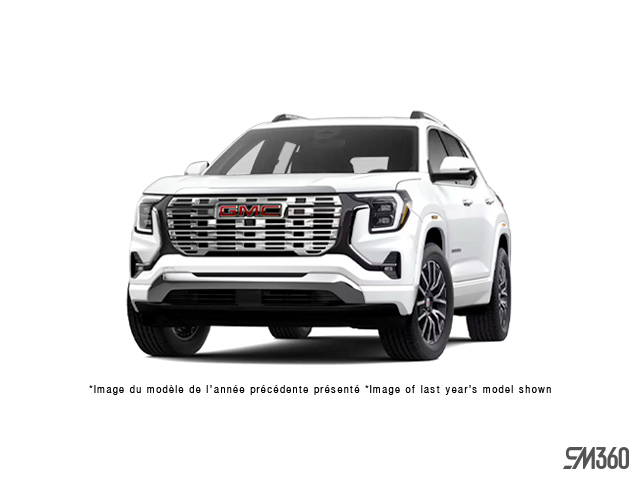
The Acadia Elevation seats 8 across three rows in a 2-3-3 layout, its widest configuration. AT4, Denali, and Denali Ultimate switch to 7-passenger seating with 2-2-3 captain’s chairs in the second row, plus a Smart Slide lever that folds and slides a chair forward for third-row access.
The Terrain skips the third row entirely and seats 5 in a 2-3 layout. There is one row of doors to manage behind the front seats, no lever to pull, and no third-row buckle to check before pulling out of the driveway.
Cargo With and Without Passengers Aboard
With all three rows in place, the Acadia’s third-row cargo area holds 651 L, room for a stroller, a couple of hockey bags, or a full grocery run even with seven or eight people aboard. Fold the third row and that space grows to 1,623 L behind the second row.
The Terrain, with no third row to protect, holds 844 L behind its rear seats with all five seats in use, more than the Acadia manages with its own third row up. Fold the Terrain’s second row and cargo space reaches 1,798 L.
The trade-off is straightforward. The Acadia reserves cargo room for occasional extra passengers, while the Terrain gives every trip more everyday space because it never has to plan around a third row.
Footprint, Ground Clearance, and Everyday Parking
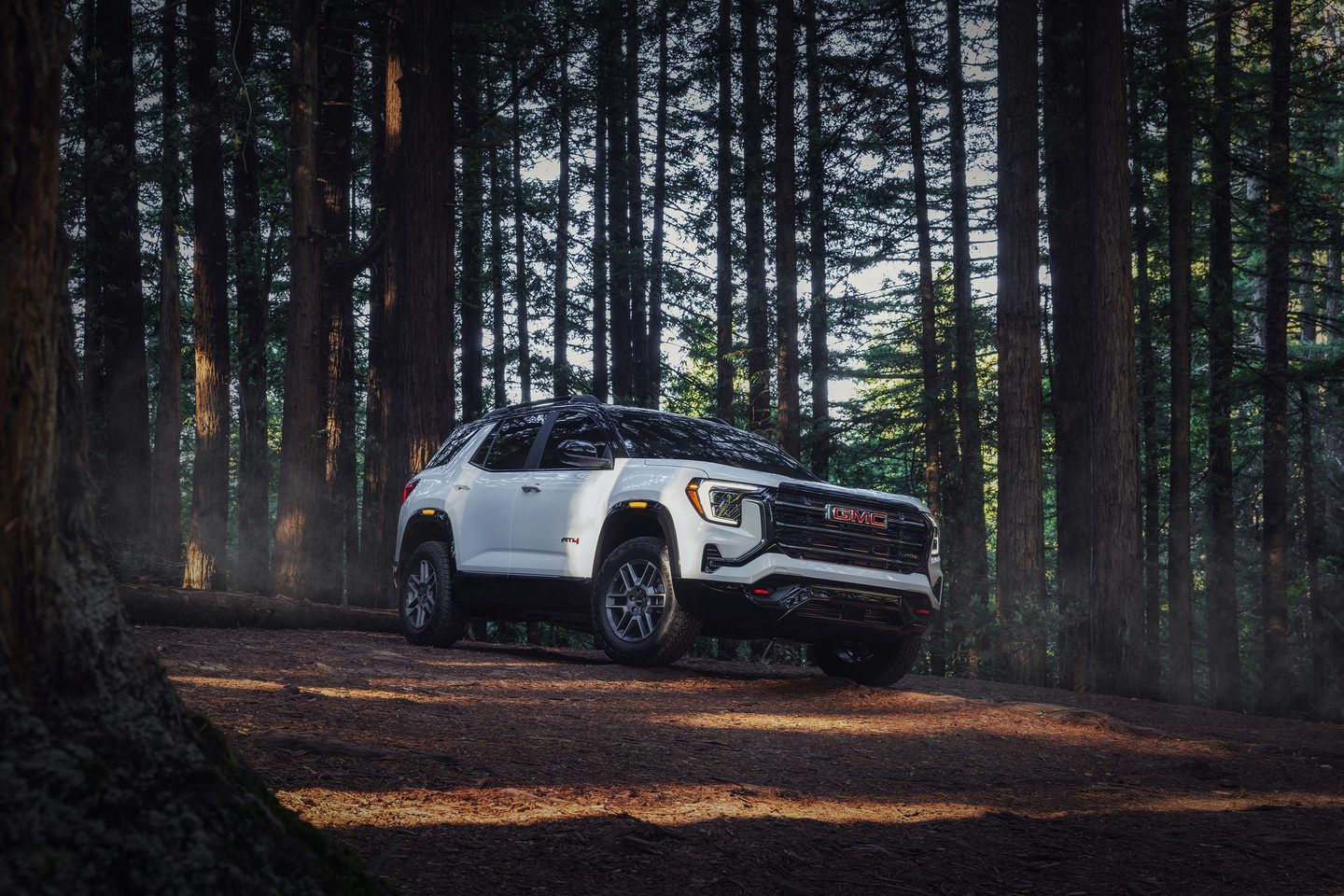
At 5,181 mm long, 2,031 mm wide, and riding a 3,072 mm wheelbase, the Acadia AT4 carries a larger road presence along with 197 mm of minimum ground clearance for rough pavement or a snow-covered driveway.
The Terrain AT4 measures 4,597 mm long and 1,892 mm wide on a 2,730 mm wheelbase, with 166 mm of clearance. That smaller footprint makes tight parkades, narrow driveways, and street parking noticeably easier to live with day to day.
Powertrain and Daily Driving Character
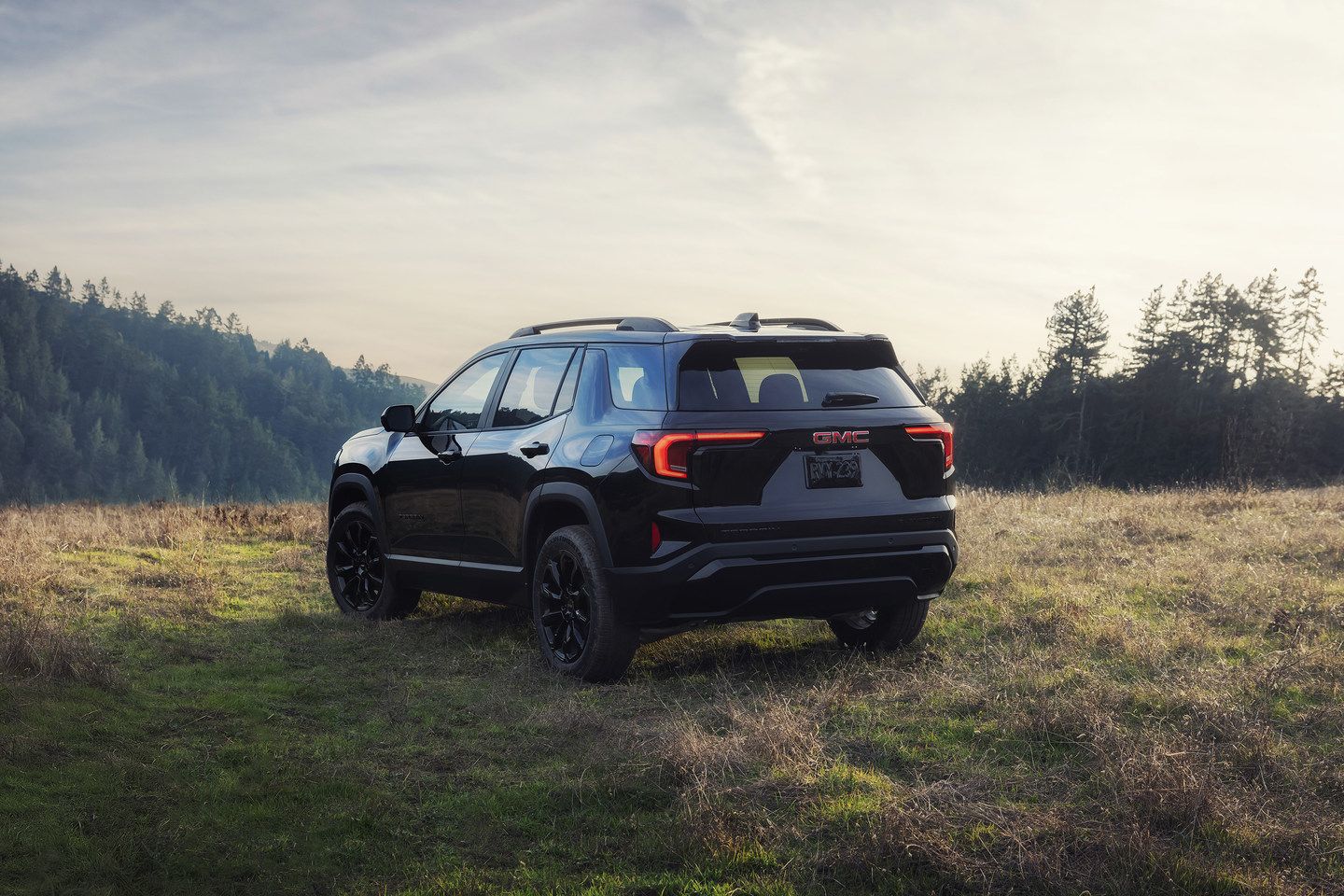
Every Terrain trim shares the same 1.5 L turbocharged four-cylinder engine, producing 175 hp and 203 lb-ft of torque, paired with an 8-speed automatic and standard all-wheel drive. City and highway ratings on the Elevation trim land at 9.9 L/100 km and 8.5 L/100 km, numbers built around commuting rather than towing.
The Acadia pairs its turbocharged gas engine with standard all-wheel drive across the lineup, returning 12.1 L/100 km city and 10.1 L/100 km highway. The AT4 also carries a factory tow rating of 5,000 lbs (2,268 kg) for a small trailer, boat, or camper trip.
That towing figure, along with the extra length and clearance, points the Acadia toward mixed-use family duty. The Terrain’s tighter dimensions and lower fuel bill point toward daily commuting and in-town errands instead.
Trim Structure and Standard Features
Both lineups follow a similar shape: a value-oriented entry trim, an off-road-flavoured AT4, and a premium Denali tier, with the Acadia adding a Denali Ultimate above that. Adaptive Cruise Control and Forward Collision Alert come standard across every trim in both lineups, so moving up the ladder in either model adds comfort and finish more than baseline driver-assistance coverage.
Which GMC Fits Your Drive?
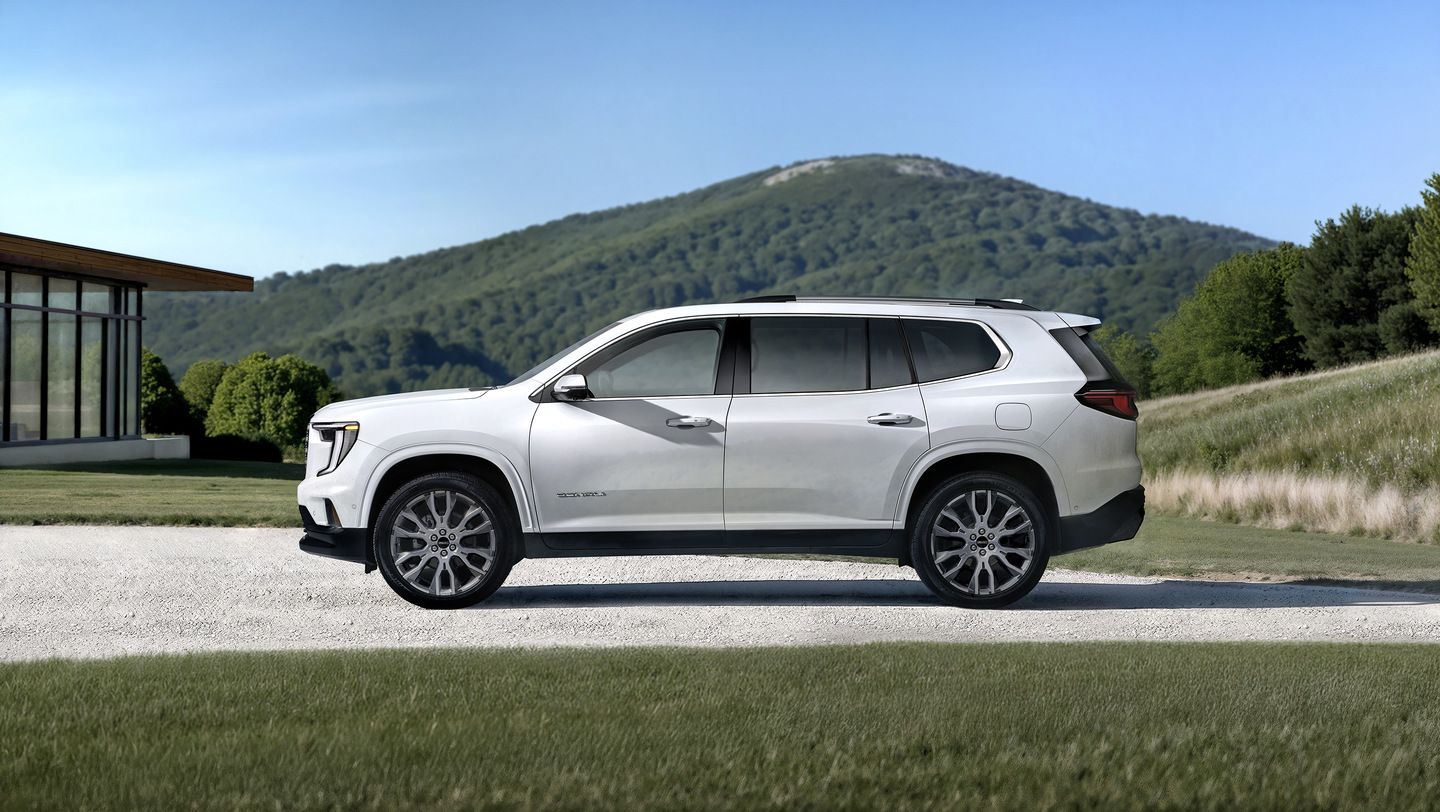
For a household that regularly carries more than five people, carpools kids to weekend sports, or needs a seat ready for grandparents visiting, the Acadia’s third row turns those occasional trips into a non-issue instead of a logistics problem. Growing families who expect to need extra seating within a few years often land here too.
For a household that tops out at five, or for anyone parking in a tight condo garage or downtown street daily, the Terrain’s smaller footprint and lower fuel bill answer more of the week’s actual driving. Empty nesters, commuters, and weekend travellers without a regular need for a seventh or eighth seat tend to find the two-row layout is plenty.
- Larger or growing families, carpool duty, frequent extra passengers: Acadia
- Smaller households, empty nesters, commuters, tight parking: Terrain
- Occasional need for both cargo and extra seating: Acadia’s second-row flexibility
- Weekly errands, highway commuting, easier manoeuvring: Terrain
Comparing the Acadia and Terrain at Applewood Chevrolet Buick GMC
The 2027 Acadia and Terrain solve two different problems inside the same GMC lineup: one built around three rows and mixed-use hauling, the other around a simpler two-row cabin and easier daily driving.
Visit Applewood Chevrolet Buick GMC in Mississauga to sit in the Acadia’s third row, check the Terrain’s cargo area, and test how each one handles parking and rear-seat access before you decide.