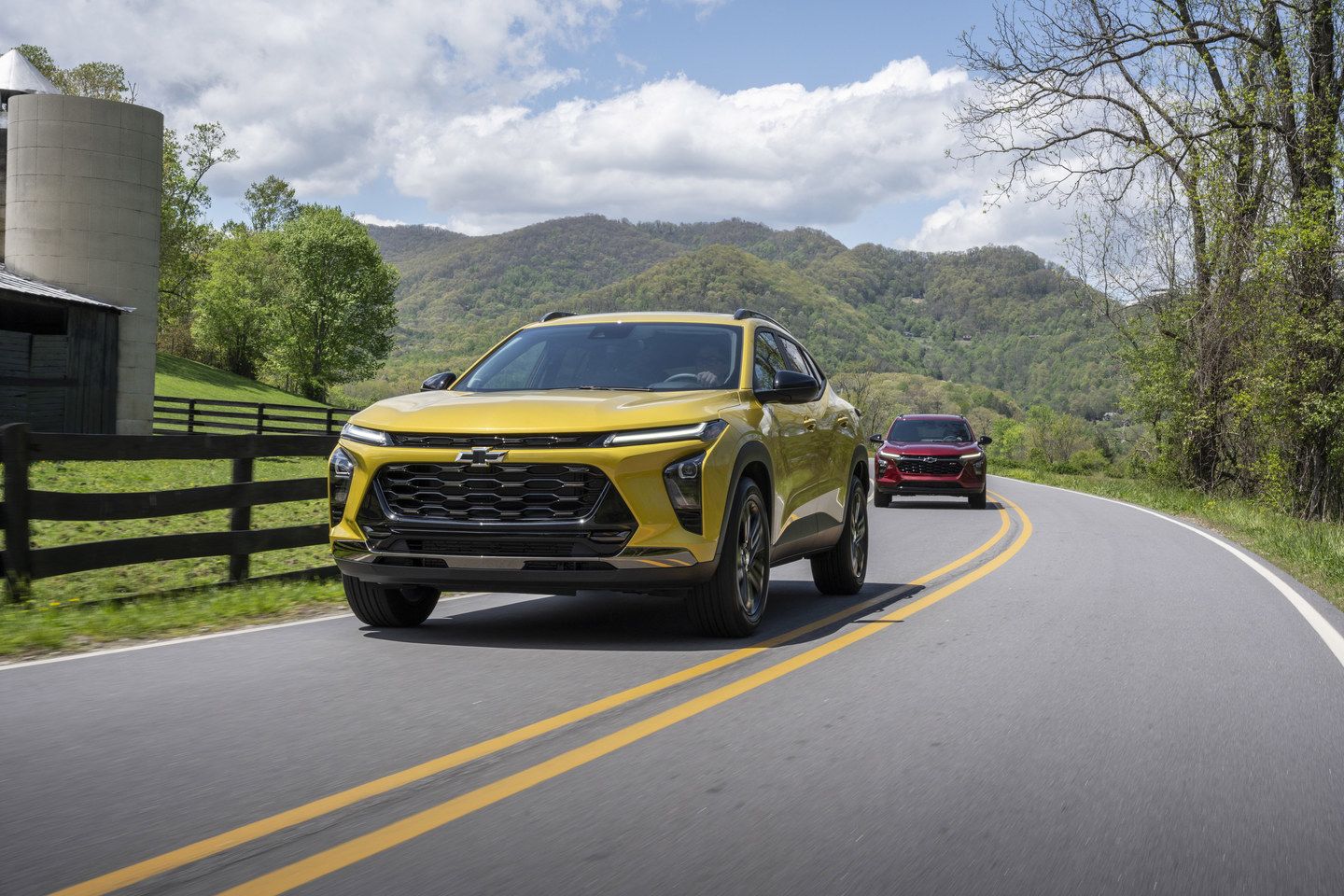
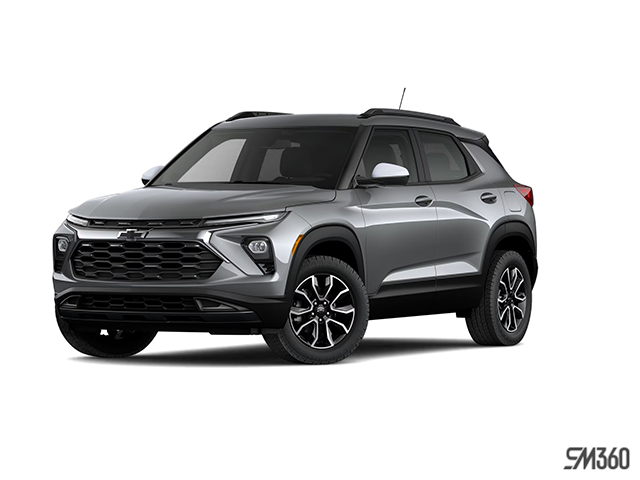
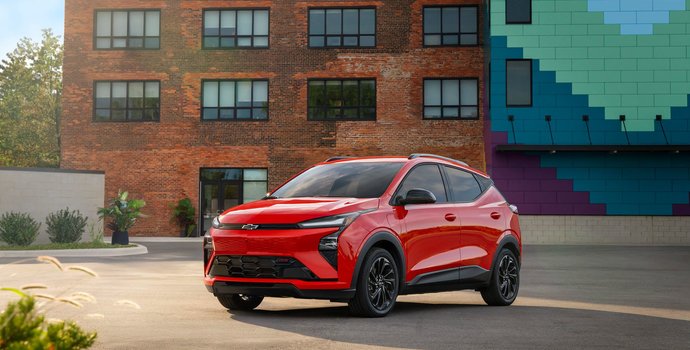
Two small Chevrolet SUVs, one showroom, one decision. The 2026 Trax and Trailblazer sit close in size but split in a way that matters once you start comparing engines, drivetrains, and cargo numbers side by side.
For Ontario shoppers narrowing a short list this September, the right answer depends less on badge and more on how the vehicle actually gets used week to week: city errands and tight parking, or mixed-condition driving that benefits from all-wheel traction.
2026 Trax vs Trailblazer at a Glance
|
Spec
|
Trax
|
Trailblazer
|
|
Engine
|
1.2 L turbo I3, 137 hp / 162 lb-ft
|
1.2 L turbo I3, 137 hp / 162 lb-ft (FWD); 1.3 L turbo I3, 155 hp / 174 lb-ft
|
|
Drivetrain
|
FWD only
|
FWD or AWD, by trim and engine
|
|
Transmission
|
6-speed automatic
|
CVT (FWD) or 9-speed automatic (AWD)
|
|
Fuel economy (combined)
|
8.1 L/100 km
|
7.7 to 8.7 L/100 km, by configuration
|
|
Cargo, seats up
|
725 L
|
716 L
|
|
Cargo, seats folded
|
1,532 L
|
1,540 L
|
|
Towing
|
Not intended for towing
|
1,000 lbs (454 kg)
|
Powertrain and Drivetrain: One Path or Several
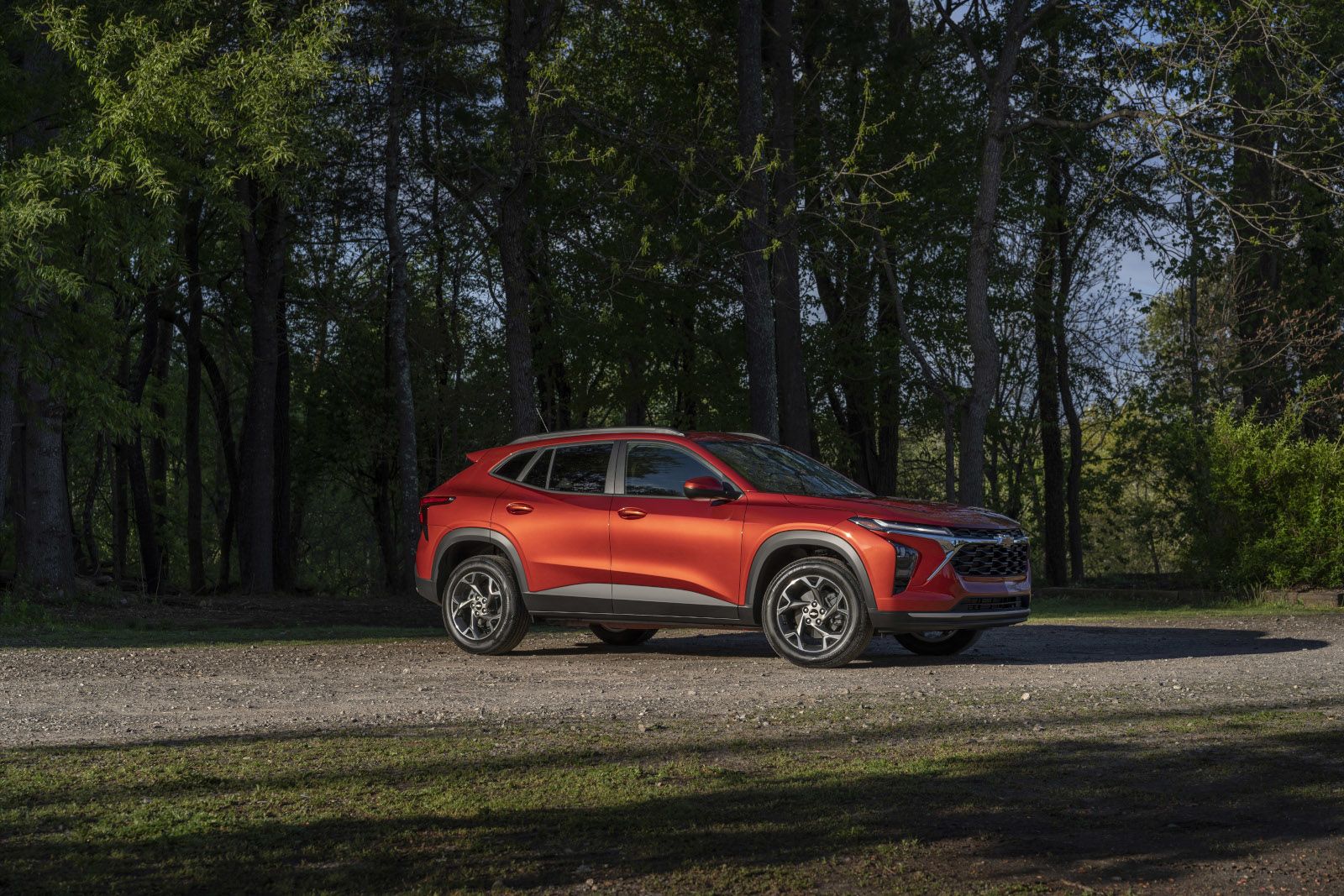
The Trax keeps this decision simple. Every trim runs the same 1.2 L turbocharged inline-3, making 137 hp and 162 lb-ft of torque, paired with a 6-speed automatic and front-wheel drive only. There is no engine choice and no AWD option to weigh.
The Trailblazer branches. LS and LT FWD trims use that same 1.2 L turbo three-cylinder through a CVT, while a 1.3 L turbo inline-3 (155 hp, 174 lb-ft) is available on LT FWD and standard on AWD models, where it pairs with a 9-speed automatic instead of a CVT.
For a driver who wants one straightforward setup and nothing to decide at the configurator, the Trax’s single powertrain removes that step entirely. For a driver who wants factory AWD for mixed-condition Ontario roads, or the extra 18 hp and 12 lb-ft the 1.3 L brings, the Trailblazer’s AWD trims deliver that without leaving the Chevrolet showroom.
Cargo Space for Groceries, Gear, and Weekend Trips
Both SUVs land in nearly the same place on cargo, just measured slightly differently. The Trax holds 725 L behind the rear seats and 1,532 L with them folded flat. The Trailblazer holds 716 L behind the rear seats and 1,540 L folded.
That gap is small enough that neither one changes what fits: a grocery run, hockey bags, or a folded stroller behave the same way in either vehicle. Where they differ is the seat itself. The Trax uses a 60/40 split-folding rear seat; the Trailblazer uses a 40/60 split-folding rear bench, a small difference in how you can load long items while still carrying a passenger.
For a school-run routine with bikes or sports gear that need the back seat folded flat some days and occupied on others, that split ratio is worth checking against your actual load pattern rather than assuming they behave identically.
Fuel Efficiency and Commute Fit
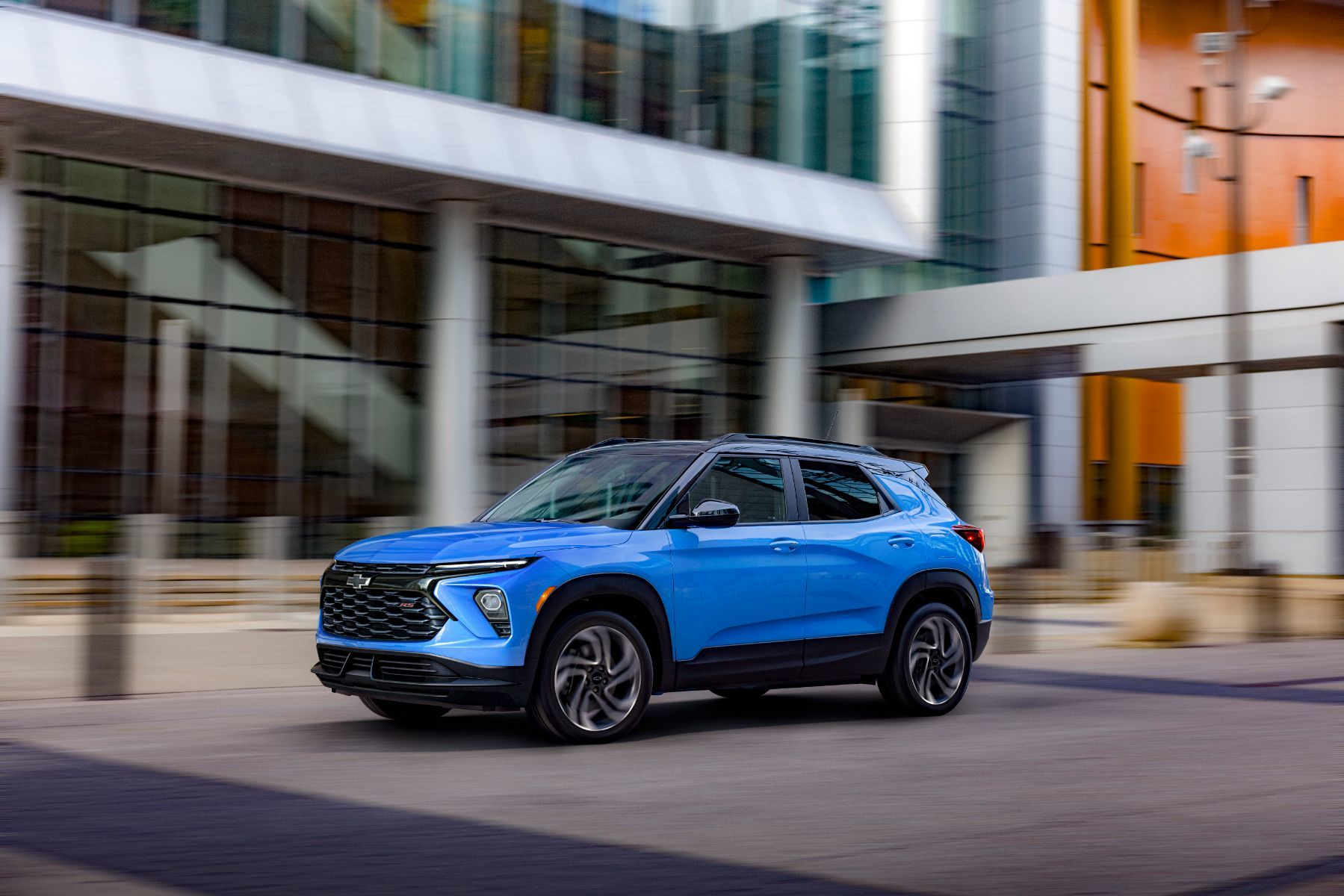
The Trax posts a combined rating of 8.1 L/100 km (8.5 city, 7.6 highway) across every trim, since there is only one powertrain to rate.
The Trailblazer’s number moves with the configuration. The 1.2 L FWD combines at 7.8 L/100 km, the 1.3 L FWD variant improves slightly to 7.7 L/100 km, and the 1.3 L AWD setup runs 8.7 L/100 km combined (9.1 city, 8.1 highway) to support the extra traction hardware.
A commuter doing mostly paved, front-drive-friendly routes gets a slight efficiency edge from a base Trailblazer FWD trim over the Trax. A driver who values standard AWD accepts a real, measurable trade: roughly 0.6 L more per 100 km against the Trax’s single-configuration number.
Trim Ladders and Shared Safety Content
The Trax spreads its four trims, 1RS, LT, 2RS, and ACTIV, across wheel sizes (18-, 17-, and 19-inch), display size (an 8-inch touchscreen on 1RS versus an 11-inch HD unit from LT up), and seat features like a manual versus power driver’s seat. The powertrain never changes; only the content does.
The Trailblazer’s ladder moves on two axes at once. LS and LT can be had in FWD or AWD, RS and ACTIV are AWD only, and the FWD-to-AWD jump also changes the transmission and engine availability, not just trim badges and wheel finishes.
Both SUVs share the same core safety suite as standard equipment: automatic emergency braking, front pedestrian braking, forward collision alert, following distance indicator, lane keep assist with lane departure warning, IntelliBeam automatic high-beam assist, and an HD rear vision camera. Neither buyer is giving up that foundation by choosing one over the other.
Which Chevrolet Fits Your Drive?
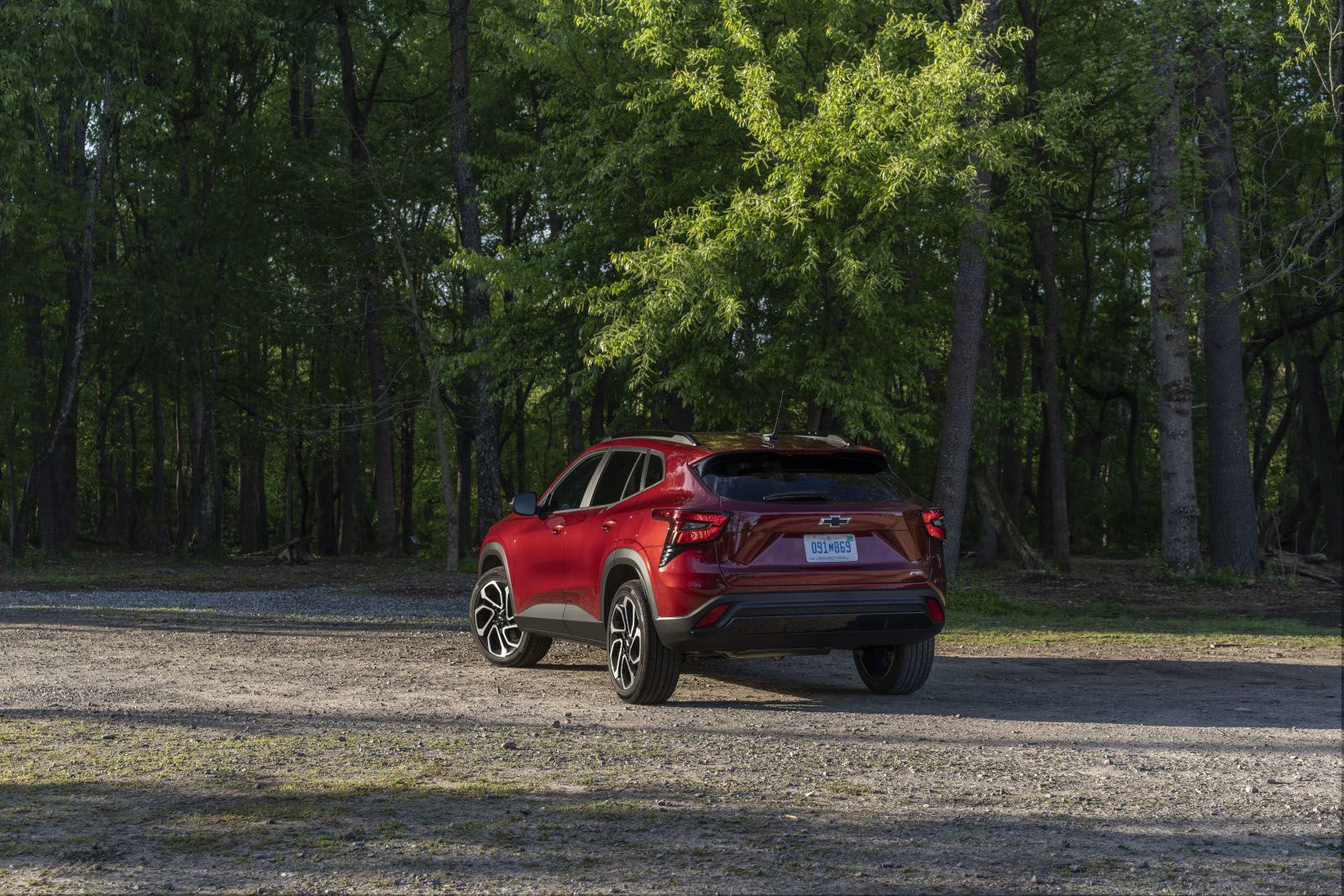
If your driving is mostly city streets, tight parking, and a predictable commute, the Trax’s single FWD powertrain and compact footprint remove complexity from the buying decision. You are not weighing engine or drivetrain options, just trim content.
If your household needs factory AWD for variable road conditions, or you want the option to step up to the 155 hp 1.3 L engine, the Trailblazer’s broader driveline ladder is built for that choice. Its trim structure lets you match engine and drivetrain to how you actually drive, not just how the cabin is dressed.
Neither path is a downgrade from the other. A shopper prioritizing simplicity is better served by the Trax; a shopper who wants drivetrain flexibility and extra power on tap is better served by the Trailblazer.
Finding Your Fit in Chevrolet’s Small SUV Lineup
The Trax and Trailblazer cover the small SUV segment from two directions: one keeps the powertrain simple, the other adds engine and drivetrain choice. Cargo space and standard safety content stay close between them.
Explore the 2026 Trax and Trailblazer lineup at Applewood Chevrolet Buick GMC in Mississauga, Ontario, and work with our team to match a trim and drivetrain to your daily routine, whether that means city commuting or mixed-condition driving.